
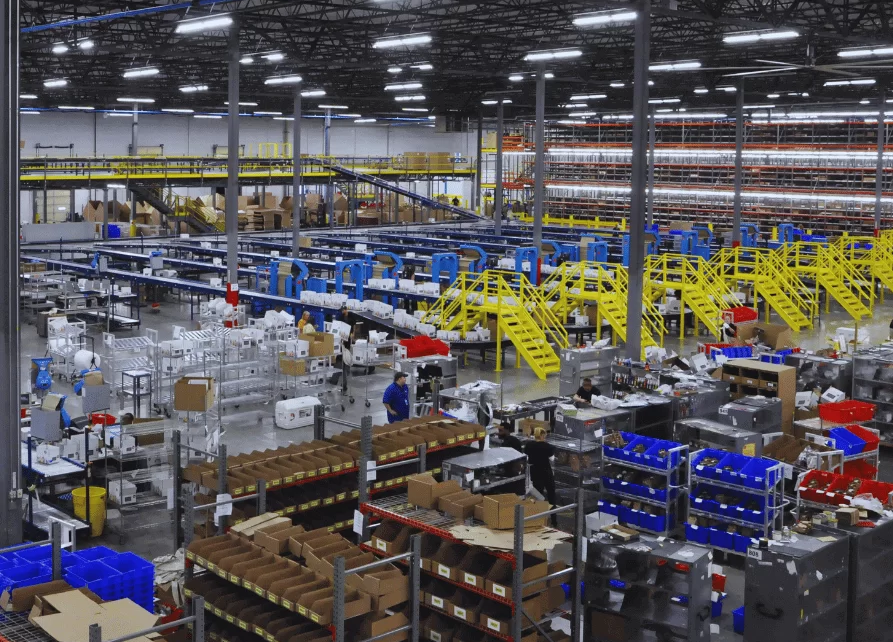
For businesses of all sizes, customer satisfaction is a top priority, and fast, reliable delivery plays a major role in achieving it. 3PL services have become an important solution for companies that want to meet customer expectations while managing shipping and fulfillment more efficiently. Ensuring that products reach customers quickly and at a reasonable cost is at the core of successful operations. However, as a business grows, managing logistics and supply chain processes becomes more complex and expensive. Errors in fulfillment and shipping can negatively affect the customer experience, slow down growth, and reduce overall profitability.
To address these challenges, many businesses turn to third-party logistics providers, commonly known as 3PLs wherein they outsource fulfillment to a 3PL warehouse. The rapid growth of ecommerce and the increasing demand for faster delivery and competitive pricing have greatly increased the need for these services. Outsourcing logistics to a 3PL can give businesses the flexibility, technology, and professional support needed to scale operations more smoothly and focus on other important areas of growth.
What Is Third-Party Logistics (3PL)?
Third-party logistics refers to the outsourcing of supply chain operations to a specialized provider that manages the movement of goods from production to delivery. These services typically include receiving inventory, storing products, picking and packing orders, and shipping them to customers.
In addition to these core services, many providers offer extended logistics solutions such as inventory management, product assembly, packaging customization, and procurement support. With years of experience and established networks, these providers are able to streamline operations, reduce costs, and improve delivery efficiency for businesses.
Advancements in tracking technologies and connected systems have further enhanced supply chain visibility. Modern logistics solutions now allow businesses to monitor shipments, manage inventory in real time, and maintain greater control over their operations.
Types of 3PL Services
Not all logistics providers offer the same range of services, and many specialize in specific areas of the supply chain. Some focus primarily on transportation, managing the movement of goods between manufacturers, warehouses, and customers. Others specialize in warehousing and fulfillment, handling storage, order processing, and returns.
There are also providers that focus on financial and information services, helping businesses optimize logistics networks through cost analysis, inventory tracking, and operational insights. Larger providers may offer a combination of these services, delivering a more comprehensive logistics solution.
Understanding the Difference Between 1PL, 2PL, 3PL, 4PL, and 5PL
Different logistics models define how much control a business retains over its supply chain. In a first-party logistics setup, the business manages all aspects of storage, shipping, and fulfillment internally. This approach offers full control but requires significant resources and infrastructure.
Second-party logistics providers are responsible for transportation and typically own the vehicles or vessels used to move goods. They act as carriers that facilitate the physical movement of products.
In a third-party logistics model, the business outsources operational tasks such as warehousing and order fulfillment while maintaining oversight of the overall strategy. The provider manages day-to-day logistics operations within its facilities.
A fourth-party logistics provider takes a more comprehensive approach by overseeing the entire supply chain. This model involves coordinating multiple service providers and acting as a central point of contact for all logistics activities.
Fifth-party logistics represents a fully integrated model that leverages advanced technology to manage complex supply chains across multiple providers. This approach focuses on end-to-end optimization and real-time visibility across all logistics operations.
Core Functions of a 3PL Provider
Working with a logistics provider may initially seem complex, but it simplifies many operational challenges by shifting responsibility to experienced professionals. These providers manage key aspects of fulfillment, allowing businesses to focus on growth and strategy.
The process begins with receiving inventory, where products are delivered to a warehouse and stored until needed. Advanced systems track product locations and quantities, ensuring efficient order processing.
When a customer places an order, the picking process begins. Items are located within the warehouse and selected based on the order details. This step requires accuracy and efficiency, especially when handling different order types and volumes.
Packing follows, where items are prepared for shipment according to predefined standards. Proper packaging ensures that products arrive safely while maintaining a professional presentation.
Shipping is one of the most critical stages, involving coordination with carriers, selection of delivery options, and management of timelines. A well-planned shipping strategy helps reduce costs while ensuring timely delivery.
Returns management is also an essential function, as it involves receiving returned items, assessing their condition, and determining the appropriate next steps. Efficient handling of returns contributes to a positive customer experience.
Additional Benefits of 3PL Services
Beyond fulfillment, logistics providers offer a range of benefits that support overall business performance. Cost savings are one of the primary advantages, as providers leverage their scale to negotiate better rates for shipping, materials, and operations. This reduces the need for businesses to invest in infrastructure and staffing.
Professional expertise is another key benefit, as logistics providers bring specialized knowledge in supply chain management, transportation, and inventory control. Their experience helps streamline operations and improve efficiency.
Technology integration plays an increasingly important role in modern logistics. Advanced systems enable real-time tracking, automated processes, and improved data visibility, allowing businesses to make informed decisions and enhance customer satisfaction.
Inventory management is a critical component of logistics, ensuring that products are stored securely and tracked accurately. Real-time visibility helps prevent stock shortages and supports better planning.
Logistics providers also support different fulfillment models, including direct-to-consumer and business-to-business operations. These processes vary in complexity and scale, requiring careful coordination to meet delivery requirements and maintain compliance with retail standards.
Value-Added Logistics Services
Many logistics providers offer additional services designed to meet evolving customer demands. These services may include product assembly, customized packaging, and order personalization, which enhance the overall customer experience.
Some providers also handle product disposal or recycling, ensuring that obsolete or returned items are managed responsibly. These value-added services allow businesses to adapt quickly to changing market needs while maintaining operational efficiency.
The Role of Technology in Modern Logistics
Technology has transformed the logistics industry, enabling seamless integration between online stores, warehouses, and transportation networks. Advanced systems provide real-time insights into inventory levels, order status, and delivery performance.
By leveraging these tools, businesses can improve accuracy, reduce errors, and maintain better control over their supply chains. Technology-driven logistics solutions also support scalability, allowing businesses to grow without compromising efficiency.
Faster Shipping and Distributed Inventory
Meeting customer expectations for fast delivery requires a well-structured logistics network. Many providers operate multiple fulfillment centers in strategic locations, allowing products to be stored closer to customers.
This approach reduces shipping times and costs while improving overall delivery performance. Automated systems ensure that orders are fulfilled from the most efficient location, optimizing both speed and efficiency.
Reverse Logistics and Returns Management
Returns are an unavoidable part of ecommerce, and managing them effectively is essential for maintaining customer satisfaction. Reverse logistics involves the process of moving products from customers back to warehouses or manufacturers.
This process includes inspection, restocking, or disposal of returned items. A streamlined returns system helps reduce losses, improve efficiency, and ensure a positive customer experience.
Conclusion
Outsourcing logistics to a third-party provider may initially seem complex, but it can significantly improve operational efficiency and support business growth. By handling fulfillment, shipping, and inventory management, these providers allow businesses to focus on product development, marketing, and customer engagement.
Efficient logistics play a crucial role in delivering a positive customer experience, which ultimately drives long-term success. With the right approach and a reliable logistics partner, businesses can scale effectively, reduce costs, and meet the growing demands of modern commerce.